Get a high-level overview of what Elo Ratings are as @kylebennison explains what goes into this new college football stat. You can read the full article that explains the details here.
College Football
-

Introducing College Football Elo Ratings
In preparation for the 2020 College Football season, we did some exciting new work with something called Elo Ratings. We got them ready just in time for kickoff, only for COVID-19 to throw a wrench in the 2020 season, along with all of our lives.
Instead of waiting around, I figured I’d use this time to introduce you to this exciting new stat and show you just how powerful it can be! And we’ll cross our fingers that we actually get to use it in 2020.
What is an Elo?
You mean who is Elo? Elo Ratings were created by physicist Arpad Elo, and were originally (and still) used to rank chess players. Elo Ratings are best-suited for head-to-head games. The basic premise is that at the very start of measuring Elo, you assign every team a score of 1500. As the teams play each other, you keep track of the results, and then update the ratings of each team up or down depending on the outcome of the game and how good their opponent was.
What goes into College Football Elo Ratings?
Honestly, not much. All we need to calculate a team’s updated Elo Ratings from week to week are:
- their current Elo Rating
- the actual result of the game (win, loss, or tie)
- the expected result of the game, based on each team’s Elo going into the game (AKA pre-game win probability)
- how much weight you give to the result of each game, called the k-factor
These are the absolute minimum requirements needed to calculate Elo. However, we do throw in a few extra things for good measure. First is home field advantage. After testing a bunch of different values to see which made our calculation the most accurate, we came up with a home field advantage of +55 Elo Points to the home team. For two otherwise even-rated teams, this works out to be about an 8% increase in win probability. So nothing to scoff at. For teams that are already outmatched, being at home doesn’t help them all that much, maybe around 2% depending on the opponent.
The other thing we need to do once per season is regress each team back to the mean score of 1500. This regression factor, from 0 to 1, shows how much consistency a team can hold on to from season to season. In the NFL, teams regress by one-third, meaning they retain 67% of their strength from the previous season. In other sports it may be higher or lower. In College Football, after testing a range of values, we found that .95 was the best option, meaning that from one season to the next, each team gets to keep 95% of it’s Elo Rating from last year. This is really high, and we were kind of surprised at first. But that just speaks to how strong the powerhouses are at recruiting top talent year in, year out.
A little more info about the k-factor
The exact calculation for a team’s new Elo Rating is to take their current Elo Rating, and add to it k-times the difference between the actual score and the expected score of the game. It looks like this.
New Rating = Current Rating + k * (Actual Score - Expected Score)Now the k that we landed on is 85. This is pretty darn high. For reference, most NFL Elo Ratings use a k from 20-40, and some sports with long seasons like baseball may use a k as low as 4, meaning that each win has little significance, but the sum of many wins adds up over time. But, as we know, college football has a short 12-game regular season (even shorter this year). And when it comes to getting into the playoffs, each game is make or break. That’s why it makes some sense that each win holds a lot of weight, and especially if a team was expected to lose by a big margin and wins (or vice-versa). This allows Elo to quickly correct itself if a low-rated team comes out and gets a few big wins, or if a powerhouse blows a cupcake game.
That said, the most a team could improve their Elo Rating in one week is 85, if they were to win a game (Actual Score = 1) that they were expected to lose with near certainty (Expected Score = 0). This would add k * 1, or 85 points, to their Elo Rating. And if they lost a game (Actual Score = 0) that they were expected to win easily (Expected Score = 1), then they would lose 85 Elo Points and their rating would go down.
One other note: the expected score, or win probability, is a bit more complicated to calculate, but it results in a number between 0 and 1. The actual score is just the outcome of the game. A 1 equals a win, a 0 equals a loss, and a 0.5 would equal a tie, although there are currently no ties in college football.
How accurate are your Elo Ratings?
From 2010–2019, with our most optimized inputs, we came out with a Brier score of .175. A Brier score is the mean squared error (MSE), meaning the difference between the expected score (our predicted win probability using Elo) and the actual outcome (a 1 or 0 for a win or loss). So, lower is better. And that’s pretty low. What it amounts to is that, on average, our predictions were off by about .4. That doesn’t sound great, but keep in mind that if we give two teams a 50% chance of winning each, one of those teams is going to end up winning the game, and we will have been off by .5 in the actual vs. expected scores. A more practical validation of our model is the below graph, which shows how accurate our predictions were at each confidence level.
Graph of Actual vs. Expected Wins for Each Win Probability Prediction
Graph of Expected (Predicted) Win Probability on the x-axis, and actual win rate for teams with that predicted win probability on the y-axis. The relationship is linear, and for games that we predicted a win or loss with fairly high certainty (> 80% or < 10%), teams averaged about as many wins as predicted. When we look at each actual outcome vs. our predicted result grouped by .01, we see a pretty darn linear line, meaning that we are fairly accurate with our predictions. For instance, when we said a team had a 95% chance of winning the game, which we gave 247 teams over the course of 20 seasons, in reality they won that game 96% of the time. That’s pretty accurate. Likewise, if we predicted a 5% chance of a team winning, they actually won 6.4% of the team.
We do notice here that we tend to underpredict win probabilities for some lower-tiered teams, meaning there are a good deal of upsets in college football, so that’s something we’d hope to correct in the future with the addition of more data; one example of this would be what fivethirtyeight does with the NFL, by adding a factor for whether the starting QB is playing, which has a significant effect on the outcome of games. Perhaps that is the cause of some of these upsets. Unfortunately right now with 130 teams and 65 games every Saturday, it’s a bit hard for us to keep up with that at the moment. Another thought is that some of these upsets come from D-II or D-III teams early on in the season that aren’t tracked by our Elo Ratings weekly, since this data only covers D-I teams. As a result, there could be a team that hasn’t had their rating updated since the game they played against a D-I opponent one year ago, and they could be a completely different team by then. If you have any ideas on how to adjust for that, let us know (a safe bet may be to regress these teams with less than 12 ratings per season closer to 1500).
What we see at the tail ends of the spectrum is that when a team is predicted to win with high confidence (above 92% win probability) is when we tend to get the result right more often. This implies that one-sided match-ups, which occur fairly often in CFB, usually go as planned. On the other side, when we give a team below an 8% win probability, you can be fairly certain that is an accurate probability we’ve given.
So what do we do with this information?
Well for one thing, this is just cool to track and follow throughout the season to see how quickly teams can rise and fall. Take a look at LSU’s rise to the Championship last season. Up until the CFP Final, LSU was still the underdog in Elo Ratings.

We can also try to use this data to inform betting decisions on games. This would be most useful when Elo is giving a team a high win probability (above 92% to be safe), and the betting odds imply otherwise. In this case, it could be a good opportunity to take that bet. We’ll be monitoring that this season and giving our predictions via our new newsletter, which you can subscribe to here.
We have to be careful with betting purely based on Elo though, because if we think back to the list of factors going into Elo, it was very short. The data that sportsbooks use to set the odds are much more comprehensive, so the information-gap could potentially be large. That’s why it’s best to use Elo Ratings as a tool, along with context, to find the best options.
Where do we go from here?
We already mentioned adjusting for the starting QB being out. Once we figure out how to do that accurately every week, we’ll certainly try to implement it. Another thing that could improve the usefulness of these ratings is factoring in margin-of-victory. Many would argue that a close game against a weak opponent hints at the flaws of a top-rated team; however to Elo, a win is a win. We could correct for this by penalizing teams that come into a game with a high win probability and end up winning by a field goal, especially if it comes late in the game (vis-à-vis game control), and by rewarding teams a bit (or not penalizing them as much) for losing a game by a slim margin that they were supposed to lose by a wide margin. Lastly, we could give a team a bonus for crushing a competitor that was supposedly a 50/50 matchup. Of course, all of this has to be tested to see if it actually improves our Brier score. We can add as much data as we like to our model, but unless it actually makes our predictions significantly more accurate, what’s the point?
Thanks for reading and we look forward to sharing more Elo Ratings with you each week to see how teams are moving up and down, as well as give projected results for each upcoming game. Remember to subscribe to our new newsletter for all the key stats right in your inbox each week.
-
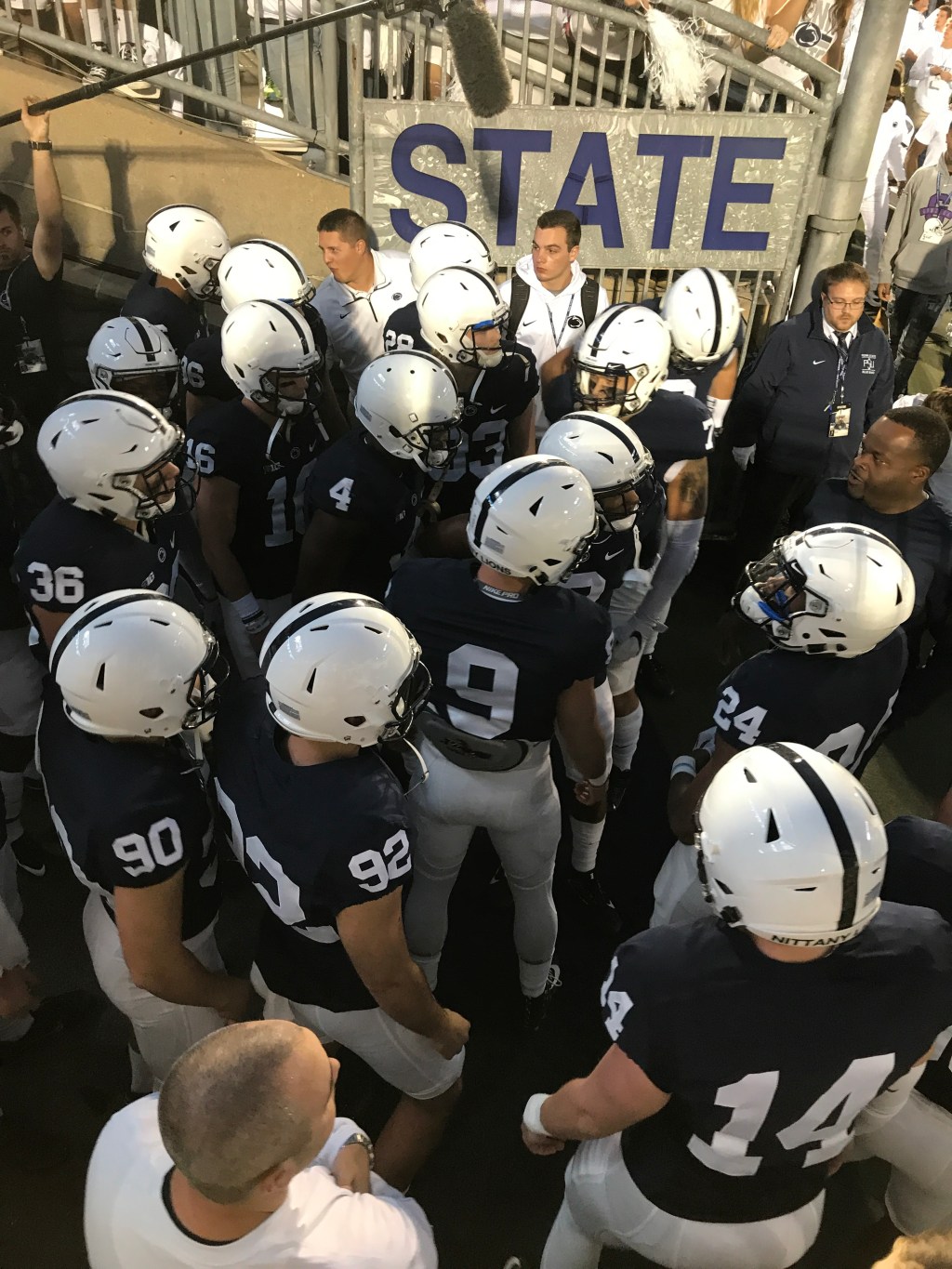
We Can’t Play College Football This Fall
As much as we may want it, there is no way to safely have college football games in the fall. Many have come forth with vague plans, but all of these make dangerous concessions and have obvious loopholes.
According to the NCAA, 73,712 college football athletes participate across D-I, D-II, and D-III universities. Even by the most conservative of estimates for the death rates of people 18-44 provided by New York City, that would still mean 15 players could potentially die from the disease (Spain estimates a death rate that would lead to 148 potential deaths for 20-29 year olds). That is 15 too many. If that happens, I think we would look back and wish that we hadn’t rushed back into playing football. I’m sure their parents would.
However, this does not include all of the coaches and staff which at some top-programs outnumber the players. These people are older and at greater risk than the athletes. Once again, if even one staff member or coach were to die from COVID-19 as a result of playing college football in August, I think we’d all question our motives.
At the end of the day, we can return to normalcy provided we follow the CDC guidelines of wearing masks, socially distancing, etc. But you cannot follow these guidelines in the game of football. The linemen have to line up 12 inches from their opponent, and grunt and grab them—facemask to facemask—every play for 3 hours. They have to tackle the ball carrier, every play, for 90 plays. They will sweat and spit and need oxygen on the sidelines, and sit on crowded buses and airplanes on their way home.
Other Teams Already Shutting Down
In the NBA, the Bucks and Kings already had to shut down their training camps after receiving positive results from coronavirus tests. Players must quarantine after a positive test until they receive two negative tests, so if this happens in a game, you could easily see an entire starting lineup sidelined from this highly contagious disease.
In college sports, The University of Houston, a school whose city is currently being ravaged by increasing COVID-19 cases, already had to shut down their voluntary workouts after six athletes tested positive less than two weeks after workouts started. They’ve shut down all sports for the moment. Expect this to become a regular occurrence if this season does indeed happen. Clemson also had 14 new positive cases recently, and a total of 37 cases on the football team alone.
The MLB returned 38 total positive tests in their first round of coronavirus testing, including 31 players. The NBA reported a 5.3% positive test rate, around the rate of US, and the MLS reported a 2.7% positive rate.
Impossible Logistics
The coordination and buy-in required for college football to safely play games is impossible with 130 D-I teams. The NBA is trying to make it work by isolating 22 teams at the ESPN Wide World of Sports complex in Orlando, and even that may prove troublesome if even one player or team staff member goes out without a mask, takes a trip to the beach, or even has an encounter with a hotel employee.
For the NCAA, isolating players isn’t an option. First of all, there is no place all 130 teams can go. These teams will have to travel each week to another part of the country and be in close physical contact with students from another school who may be taking their isolation more or less seriously than them. Then, they will have to come back to campus, bringing with them whatever is going on in their opponent’s part of the country.
Programs will shutter for weeks at a time
What do you do if even one player on your team tests positive? That player has to quarantine for 10 days after their positive test, according to the CDC. After contact tracing all those that were in contact with that player — which in the case of a football could easily be half the team (if not more) — then the CDC says that everyone in contact with the positive person needs to isolate for 14 days. In a close-quarters football locker room, that is easily the entire team having to isolate for two weeks — meaning players, coaches, physical therapists, assistants, and volunteers. And if these athletes are going to class, it also means all of their classmates.
Student-athletes will not be able to go to class
The student-athletes will have to learn online so not to expose themselves to other students who may be going to bars or going home, and also so not to expose other students to their germs from last weekend’s football game. However, you cannot realistically control this. Even without going to classes, players will undoubtedly interact with other students outside of athletes. College athletes are not paid employees, and they will break your rules and fraternize with other students, if not in class then in the dorms, apartments, and bars. These are 18-22 year olds we’re talking about, after all.
The athletes will not be able to hang out with other athletes outside their sport
If the tennis team is travelling to Maryland and the football team is going to Illinois, you don’t want to cross-contaminate these students and more than they already are. Not only is it exposing tennis players to Illinois Football germs and football players to Maryland Tennis ones, but it also makes contact tracing and the implications of a positive test much more widespread. Once again, if it’s hard enough to keep football players away from regular students, it will be near-impossible to keep them away from other student-athletes.
One positive test could shut down your previous two weeks of opponents’ programs too
If you just had a game last Saturday and now your player tests positive, doesn’t that also mean that your opponent’s team who was tackling that player all game also have to shut down? I think realistically it should. Anything less would be a dangerous concession to the guidelines laid out by the CDC, who are the experts on this sort of thing (not the ADs, as the universities would like you to believe). Additionally, the CDC deems “full competition between teams from different geographic areas” as the highest risk type of sporting activity.
Remember How This All Started
Let’s not forget that the NBA shut down the entire 30-team league after just one player tested positive for Coronavirus. If that was the standard before, I don’t see how it can change since you can’t suggest masks or social-distancing as an alternative to shutting down in sports. There are 130 teams in D-I college football, and around 100 athletes, plus dozens if not another 100 additional support staff at the top programs. Expect some of them to test positive in the close-quarters environment of not only college football, but universities in general, and for programs to shutter and reopen throughout the season.
Wait For The Vaccine
If LSU has to miss two weeks of games due to an outbreak in their locker room, or even sit 50% of their starters, not only does it put students and staff at risk unnecessarily, but it also reduces the legitimacy of the season. Personally, I’d prefer we wait and have a full and entertaining college football season in the spring—maybe even with fans—without having to worry about teams missing games, athletes getting sick, or something even worse happening to an athlete, staff member, or fellow student or faculty.
Let’s not take that chance, potentially taking a coach’s life 30 years early, or a player’s life 60 years early, just so that we can have football back 6 months early.
 Staturdays