Indycar

Indycar articles.

  • IndyCar Poised for A Breakthrough Season

    IndyCar Poised for A Breakthrough Season

    When F1 defiantly denied Andretti’s bid to enter the series, it rubbed a lot of open-wheel race fans the wrong way, not only in the US but abroad.

    Then, F1’s season-opener in Bahrain put fans to sleep, with only 10-cars finishing on the lead lap, Verstappen finishing 22 seconds ahead of the field (or rather his teammate; the field was 25 seconds behind), and no cars within one second of each other at the line.

    Now, Red Bull’s Christian Horner is embroiled in scandal, and the FIA president Mohammed Ben Sulayem is under investigation for tampering with a stewards’ decision last season. While some people may love the off-track drama, others may be tired of the “circus” that is F1, where more action occurs off the track than on it.

    Luckily for fans, Indycar awaits just around the corner this weekend. Race fans eager for some on-track action as well as uncertainty in the outcome should be chomping at the bit to tune in.

    Competitiveness and Driver Appeal

    The health of the IndyCar series is as good as ever. There were 10 different pole-winners and 7 race-winners in 2023, plus 16 different podium finishers. Alex Palou and Josef Newgarden took the major share of wins, but the series is also full of exciting young talents—Pato O’Ward, Scott McLaughlin, Colton Herta, and Kyle Kirkwood to name a few—and legendary veterans like Scott Dixon and Will Power that are still competing for both wins and championships. The series also brings the legitimacy of F1 in guys like Romain Grosjean and Marcus Ericsson with their experience in both series.

    The series strikes the right balance of international representation from Mexico to New Zealand to Sweden while still showcasing plenty of young American racing talents.

    Sustainability Focus

    They introduced the sustainably sourced “guayule” green-walled Firestone tires to the series, which just bolsters their sustainability efforts that took a huge leap forward with the biofuel they too quietly used to power the cars in 2023. Now in 2024, they’ll introduce the hybrid assist unit, which will come into play after the Indy 500 and also bring about more power for the drivers to pass with when deployed.

    Media Exposure

    To top it all off, IndyCar is more present on television than ever before. In 2023, NBC broadcast 15 races on NBC, 3 on USA network, and 1 race exclusively on Peacock. 100 Days To Indy aired on the CW, and returns for season 2 this spring, giving fans that behind-the-curtain look at the drivers and their lives that sports and reality TV fans alike are expecting these days. NBC has done a great job giving fans access to other sessions as well directly on Peacock and having the A-Team cover it, and they’ve been responsive to problems and suggestions from fans throughout the season, with Townsend Bell often going to Twitter and asking fans directly for feedback on the broadcast on the plane ride home after the race.

    There will be 12 NBC races this year, 6 USA races, and 2 Peacock races this season. With Peacock seeing subscriber growth from the NFL playoff game this year, and people being more accustomed to watching TV across multiple apps generally, we’ll see if Peacock becomes less of a friction point for fans.

    St. Pete Outlook

    St. Pete should be entertaining for fans, with opportunities for anyone in at least the top 10 to win. The average winner started 6th, and there were 7 lead changes on average per race.

    As with any street course, there’s also the chance for fireworks, with an average of 3.5 cautions for 16 laps.

    In the past 10 years, qualifying on pole only give you a slight edge, with two of the past ten winners coming from the pole position.

    With F1 fumbling their new Netflix-generated audience with every misstep they make, Indycar is poised to capture some of those fans that want the excitement of open-wheel racing that F1 has failed to deliver on.

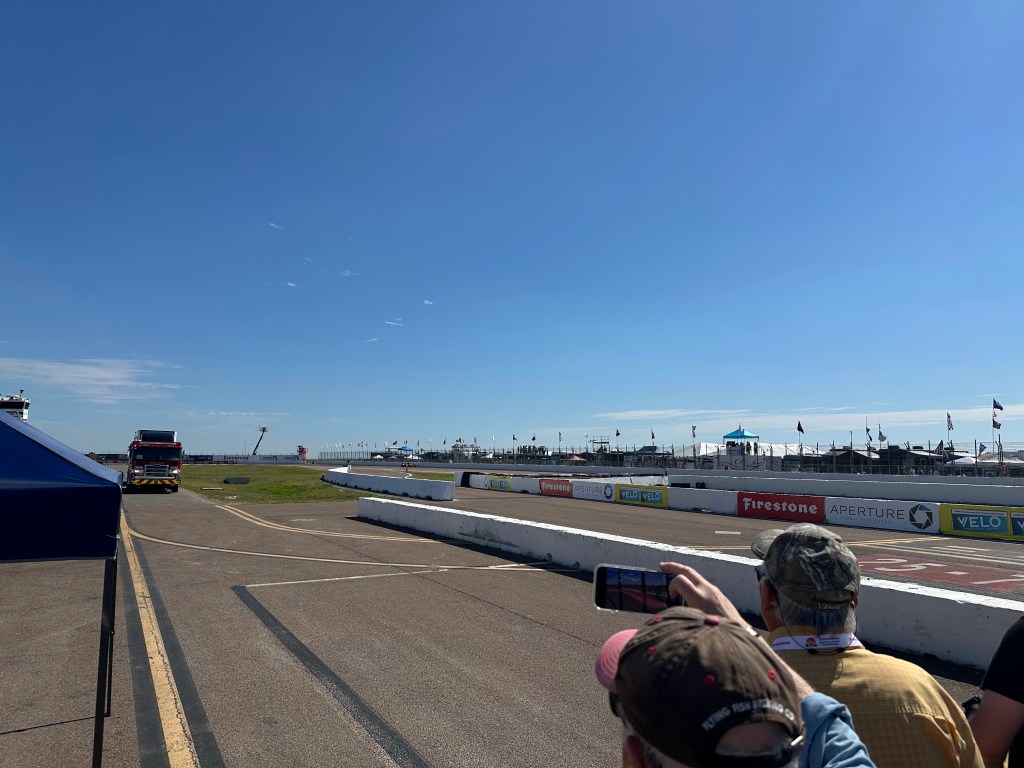
    Qualifying starts at 2PM eastern on March 9th on Peacock, and the Firestone Grand Prix of St. Petersburg kicks off the IndyCar season on NBC at 12 PM eastern on March 10th.

  • Should Pato O’Ward Have 2-Stopped at Mid-Ohio?

    Should Pato O’Ward Have 2-Stopped at Mid-Ohio?

    After Pato O’Ward’s poor qualifying effort which had him starting 25th at Mid-Ohio, the broadcasters in the NBC booth stressed that he had to “do something different”.

    And sure enough, the McLaren driver’s pit wall opted for a 3-stopper instead of the favored and eventual race-winning 2-stop strategy.

    Despite these setbacks, O’Ward still finished with the 3rd fastest total time in the field, covering 80 laps just 14 seconds slower than race winner Alex Palou despite finishing 28.5s behind on the track.

    Of course, qualifying better could have eaten into that chunk of time a bit, but could one-less pitstop and the 30 seconds saved have made up for his poor qualifying and seen O’Ward actually come from 25th to win?

    To analyze this, we need to consider two things:

    1. How much time would O’Ward have saved by pitting one less time? (This is the easy question to answer because it’s just the pit delta).
    2. How much time did O’Ward gain from having fresh tires on his extra stint, or how much time would he have lost being on older tires for longer?

    The net of these two things ends up being the delta between a 2-stopper and a 3-stopper.

    The second question is harder to answer because we don’t know how his tires would have held up, what traffic he would have hit, and all the other unknowns that may have occurred had he 2-stopped.

    The best we can do is see how the drivers around him were affected and extrapolate out to O’Ward’s race.

    Pit Delta

    The pit delta for O’Ward specifically can be found by looking at his pit-in and pit-out laps, and then comparing that to his normal non-pit green flag laps.

    O'Ward Pit Stop Delta
Time lost over average green flag lap (seconds).
Pit Stop 1: 33.307 seconds
Pit Stop 2: 28.792 seconds
Pit Stop 3: 26.775 seconds

    The Pit Delta also changes as the race progresses, and particularly the 3rd stop delta was quicker for O’Ward because he needed less fuel, so we will use that delta instead of the overall average. His 3rd stop was 2s quicker than his 2nd stop and 6.5s quicker than his first.

    So his 3rd stop added 26.775 seconds to his race time vs. staying out and doing average-paced laps.

    Green Flag Pace

    Green Flag Lap Times by Strategy (seconds)
2-Stops: Average Lap Time: 70.603. Std. Dev. Lap Time: 1.206.
3-Stops: Average Lap Time: 70.354. Std. Dev. Lap Time: 0.961.

    O’Ward’s green flag non-pit lap times on average were 69.8 seconds. The drivers on the 2-stop strategy were averaging 70.6 seconds per lap, but we care more about the fastest of the 2-stoppers, Alex Palou and Scott Dixon.

    They were both averaging 69.95. So on a typical green-flag non-pit lap, of which there were 69 for O’Ward, he was only 0.15s faster than Palou. So that equates to about 10.4s gained over those green flag laps on pace alone.

    So he gained 10.4s by choosing a 3-stop over a 2-stop, but lost 26.8s in pit-road time, for a net loss of 16.2s with a 3-stop strategy. This tells us that O’Ward likely should have stuck with a 2-stop strategy.

    Compared to the field, the 3-stopper made sense as he was almost a full second quicker per lap than the average 2-stopper, meaning he made up 55s on the field to counteract his 27s stop. But the fastest 2-stoppers were able to keep a similar pace to him even on longer stints.

    Navigating Traffic

    What likely hurt O’Ward was all the extra passes he had to make thanks to that extra stop. O’Ward started in 25th, so he had a bigger gap to make up and 24 cars to get by. He was already 6.6s behind Palou at the end of the first full green flag lap.

    O’Ward had to overtake 43 cars for position in the race, 14 more than the next-closest driver. Palou and Dixon were among the lowest in the field, with just 10 and 13 overtakes, respectively. This number doesn’t cover the backmarkers, although all drivers would have to deal with them eventually.

    You can see this take effect in the data too. While O’Ward had the fastest green-flag pace of anyone, he also had one of the highest standard deviations in lap time, meaning he was not able to be consistent. The difference may seem slight, but it is enough to make an impact on your race, and this accounts for the significant amount of extra time he spent behind and navigating around his competitors.

    You can see from the green flag lap charts that O’Ward was much more inconsistent than Palou over the course of the race, with spikes and dips in pace.

    Tire Difference

    The last thing we’ll look at is the tire dropoff, which undoubtedly helped O’Ward to pump out laps almost a whole second faster than the field average throughout the race.

    The reds and primary tires were similar until lap 15 of a stint, when the reds fell off sharply by about 0.5 seconds. At 25 laps, both tires were 1 second slower than at their best.

    As you can see, there’s about a 1-second dropoff from lap 10 to lap 20 on the reds, and about a half-second on the primaries. The reds seemed to come back a bit near the end of the stint, but that could be drivers just pushing them to the max before pitting.

    Luckily for O’Ward, he was on the primary most of the race which appears to be preferable if you want to go more than 15 laps. However, as the race went on and the traffic built up, his pace got slower and slower and his lap times more unpredictable.

    When To Do An Extra Stop

    This is a question that I want to do more research on, but my initial thoughts after doing this analysis are:

    1. You have to take track position and traffic into account. If you are going to have to re-pass more than 2 or 3 cars by pitting, it’s going to cost you a significant chunk of time. 3-stopping probably makes more sense for leaders with a big gap who want to protect against tire dropoff than it does for mid-pack trying to make a big move.
    2. Track length and cars on track matter. A short 70-second lap like Mid-Ohio with 27 cars on course appears to be the wrong place to do an extra stop. There’s too high a chance of coming out in traffic and dealing with backmarkers late in the race.
    3. Tire dropoff matters. If tire dropoff isn’t significant, then you don’t have as much to gain on fresh tires vs. worn tires. Similarly, if the difference between reds and blacks isn’t significant, then doing shorter stints on softer tires won’t be as big of an advantage.
    4. Cautions change everything. If more cautions had fallen later in the race, the analysis changes completely. Time lost on pit lane is mostly erased. Restarts provide easy overtaking opportunities.
  • Thoughts From The 2023 Indy 500

    Indycar got lucky with Kirkwood’s tire

    The tire that flew off Kirkwood’s car weighs about 22 lbs. and was traveling upwards of 200+ mph when it detached and careened (thankfully) over the grandstand and into the concourse. That impact could have been deadly for spectators. Just look what it did to a car it hit.

    Indycar got away with one there. While it is unusual for a tire to detach from the car due to the wheel tethers in place to prevent it, I wonder if Indycar and Indianapolis Motor Speedway make any changes as a result of this incident, either with stronger tethers or maybe taller fences in the corners. I wouldn’t want to sit back and hope that it doesn’t happen again.

    McLaren was their own worst enemy

    McLaren had some of the fastest cars all month long and kept 3 of the 4 in the running for the win until the last stint. That’s when things fell apart.

    To start, Rossi took the air off Rosenqvist’s wing and sent him up into the wall. Of course, it wasn’t intentional, but when you’re racing a teammate, you could have the courtesy to postpone that move until the next straight.

    O’Ward was poised for a victory being on 10-lap newer tires than the leaders and full-rich on fuel going into his last stint. Then he dove down onto the apron into T3 on Ericsson. He put a tire on the grass and that was it. It’s too bad they didn’t see the race through to the end because both cars really had a shot with their speed.

    Pato still lacks patience and maturity

    Not to harp on this fact, but Pato O’Ward ruined his own race when he took an unnecessary risk and wrecked out with seven to go. To make matters worse, he still can’t admit his own fault, instead claiming he was “too nice” and “got squeezed” into T3, and then ominously saying he “won’t forget that one”. Call it like it is, Pato: you made a risky move into 3, refused to back out, put it in the dirt, and lost it.

    He is making enemies in the series where most drivers are friendly. He threw away another race in Long Beach with a similar “send” which the first time he got away with—ruining Dixon’s race in the process—but the second time didn’t work out and ruined his own race.

    If he wants to win a championship (or a 500), he needs to keep a cool head for the entire weekend. The question is: how many chances does he get before McLaren doesn’t want to wait for him to mature. With his talent and raw speed, my guess is he’s got plenty more strikes, but he’s wasting opportunities for good points every time he puts himself in these precarious positions in races.

    At a certain point, swerving to maintain the draft isn’t worth it

    I was losing my mind when I saw Ericsson follow Newgarden practically into pit lane on the final straight (in fact I thought they were pitting for some reason!) I thought for sure that a deviation off the racing line that dramatic could not possibly be quicker… draft be damned.

    A screenshot of Newgarden and Ericsson swerving left toward pit lane on the final turn of the last lap while the rest of the field stay on the racing line.
    A screenshot of Newgarden and Ericsson swerving left toward pit lane on the final turn of the last lap while the rest of the field stay on the racing line.

    So I took a look, and my first thought was to compare them to the guy behind, Santino Ferrucci, who clearly does not swerve on the final stretch and also loses the draft because Newgarden and Ericsson are so far off-line.

    Sure enough, he gains on both Newgarden and Ericsson off the exit of 4 to the start-finish line. He gains on Newgarden to the tune of almost a tenth, and Ericsson half-a-tenth. Extrapolating that to Ericsson, he could’ve gained half-a-tenth on Newgarden just by staying straight! He lost by a tenth, so it may not have mattered, but it could’ve been closer!

    Maybe next year the driver in 2nd off the final turn will stay straight on the last lap instead of falling into this trap.

    The teams need to agree on a red flag restart procedure before the race

    It’s fine if Indycar wants to finish under green whenever possible and uses red flags to make sure that happens. But it shouldn’t be a surprise to the drivers and teams!

    This is a sport of timing to the ten-thousandth of a second and races decided by centimeters. Yet when the end of the race comes around and they need to decide whether to red-flag or finish under yellow, it feels like they’re making it up on the fly!

    I think this is an easy fix and one of the clear takeaways after the thrilling, but unorthodox, one-lap shootout. A couple ex-drivers on the broadcast in James Hinchcliffe and Danica Patrick, as well as both Marcus Ericsson (the chief anti-beneficiary) and Alexander Rossi mentioned how a pit-out to green with no full warmup lap was unheard of. We shouldn’t be dropping that on the field on a whim.

    I get that this is entertainment and it’s better for the fans if the race finishes under green. I’m fine with that. But make it a written rule so everyone is always on the same page. The finish at the Indy 500 should be regulated the same way it is the rest of the season, where they traditionally would’ve finished under yellow.