Monaco has always been the most prestigious event in all of motorsport. It shares a weekend with the Indy 500, known as the Greatest Spectacle in Motorsport, and it makes up one-third of the Triple Crown of Motorsport, which also includes the 24 Hours of Le Mans. This past weekend, however, there was little argument to be had that this event should continue to be mentioned in the same breath as the others.
While the 500 reaffirmed its claim to its prized title, the Monaco Grand Prix has fallen from grace. Maybe not for the celebrities and honorable guests that attend the party in person, but for the millions around the world who watch on TV—and for the drivers themselves.
What Happened
This year, a first-lap red flag threw any element of strategy out the window when most teams decided to change tires under red onto the hard tire and take them to the finish line, fulfilling their two-tire compound requirement. Leclerc led every lap and won handily, and there was never a moment where the result was in any doubt. (To be fair, you could say that about most F1 races for the past two seasons.)
To add insult to injury, Ferrari and Sainz were handed a gift via an F1 rules technicality. After Sainz picked up a puncture at the exit of turn 1 and then couldn’t get the car turned in at turn 4, the red flag put him back into 3rd again for the restart since the flag came out before all cars made it through sector 1. Despite all common sense indicating that he should be at the back of the field, F1 rules trumped reason as they commonly do.
After the race, sentiment on social media was poor. However, perhaps more concerning for F1 and Monaco were the references to just how boring the race was by the commentary teams and the drivers themselves.
When the drivers are struggling to stay entertained when they’re the ones in the freaking race, how can you expect the fans thousands of miles away to be excited or engaged?
Trending the Wrong Way
Monaco wasn’t always this boring. In the past decade of races (9 races), 44% of pole-sitters won, there was an average of less than 1 lead change per race, and the average starting position of the winner was 1.8.
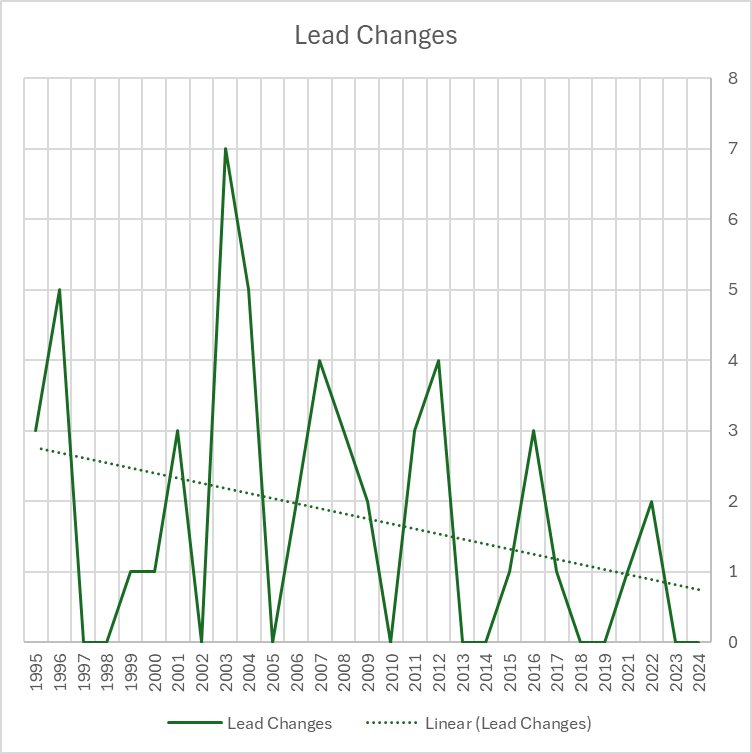
From 1995-2004 (10 races), the pole-sitter won just 20% of races, there were an average of 2.5 lead changes per race, and the average starting position of the eventual winner was 3.2. However, there was a big outlier in 96. Without that, the average starting position was 2, fairly similar to today’s average.


Common Sense Fixes
While no changes can guarantee a better race on such a narrow, low-speed circuit, it became clear this year that something has to be done. Doing nothing at this point would be negligent and outright disrespectful to the fans.
Max Verstappen and George Russell offered their tongue-in-cheek solutions in their post-race interviews, suggesting “5 mandatory pit stops”, “refueling”, “one lap on foot”, and a “mandatory nap”.
Lewis Hamilton also suggested adding mandatory pitstops.
I think there are some general rule changes that could benefit every race—not just Monaco—as well as some changes that they could make to the Monaco format itself, such as the addition of mandatory stops or extra-soft compounds with higher degradation.
Tire changes under red don’t satisfy the two-compound rule
This one is the most obvious to me, and seems to be a point of agreement among broadcasters and fans alike, but changing your tires under a red flag should not mean that you are allowed to go the whole race without stopping. Maybe they need to rethink the rule entirely and make it a mandatory pitstop rule rather than a mandatory two-compound rule. I believe that would better reflect the spirit of the rule. Or do both: one mandatory stop and two mandatory tire compounds. The more decisions that a team needs to make and the more opportunities for various strategies to take hold, the better for the sport.
Add more official timing sectors to determine order
Only the three official sectors, plus the two safety car lines are used for determining order under red-flag conditions.
While McLaren boss Andreas Siedel admitted after Monaco that he still doesn’t think mini-sectors are the appropriate answer, I think there’s a compromise to be made to get more granular positions updated more frequently throughout the lap, without compromising accuracy—a common counter to using mini-sectors.
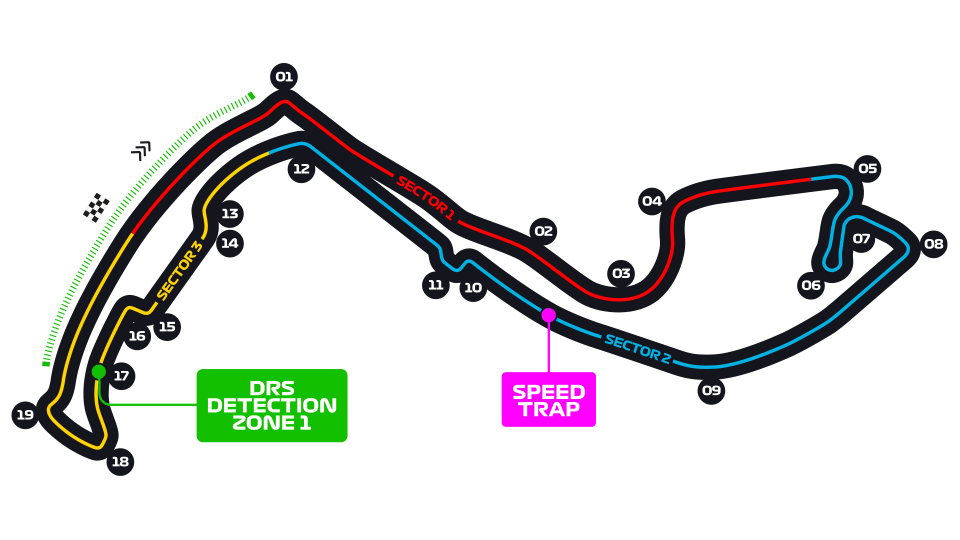
The main argument against mini-sectors, as explained by this Reddit poster, is that some of them are positioned in such a way that a driver could overshoot or even cut a corner and be “ahead” in a mini-sector, but truly behind if the next mini-sector or two were played out. The user continues, claiming that sectors are chosen in places to prevent that from happening, where cars are typically strung out in single-file.
However, if you look at the Monaco circuit, sector 1 ends in the run down to turn 5, a braking zone where exactly what regular sectors purport to prevent could indeed happen if someone overran the braking point and hit the runoff area: they would find themselves “ahead” at the end of sector 1 but well behind the pack by the time they got spun around.
While three sectors is fine for television, the race stewards should have several more sectors at their disposal for timing decisions. Here’s a simple proposal for a modified map at Monaco. You’ll notice that most of the points occur at or near already naturally-occurring spots on the track, such as the tunnel speed trap or DRS detection zone.
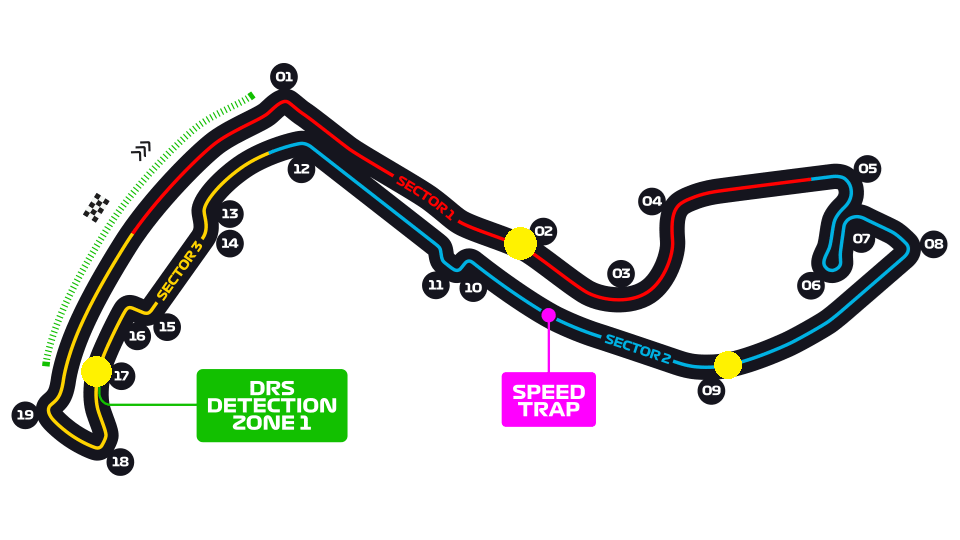
You could easily add more without compromising the integrity of the timing, especially at a street circuit like Monaco where there are very few areas to cut corners (we wouldn’t want a sector to be anywhere near the 10-11 chicane for that reason).
Use common sense
This one is vague, but any fan watching the race knew that Sainz deserved to be at the back of the field after that mistake. But the stewards opted to go by the book and reinstate him to 3rd. This is where some steward judgement needs to come in to set things right. Perhaps some lawyer can word this better than me, but if you clearly go off on your own accord and the field passes you by, then you should be at the back of the pack on the restart. Which leads me to my final point.
Let the TV broadcast aid timing decisions
I’d argue you should even use the TV broadcast as a point of reference like every other major sport does these days. Sync the video to timing and see how many cars had passed by Sainz at the moment the red flag came back out. Then determine his position based on that info. If for some reason it’s so close that you can’t clearly tell from TV, then leave things as is or resort to sector timings. But if it’s “clear and obvious”, then by all means let’s get it right.
 Staturdays
Leave a comment